


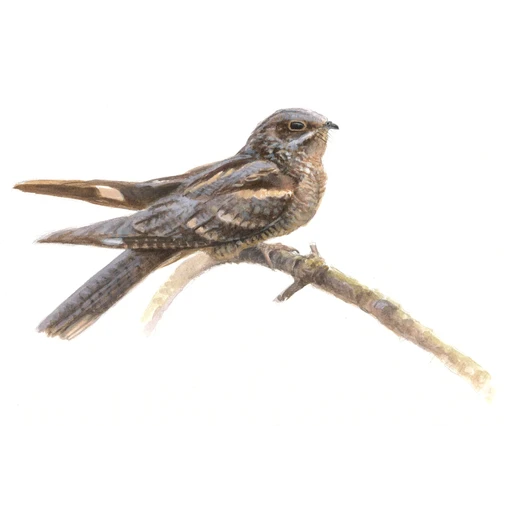
Nachtzwaluw
Waar houdt ie van
Open, rommelig terrein met heide, zand en jonge opslag. Warmte, rust en donkere nachten. Geef ’m ruimte: laat een hoekje schraal, maai weinig, en houd paden zandig in plaats van alles dicht te zaaien. In park of erf: kies voor een ruige rand met struikhei, dophei, brem en wat vliegdennen. In landbouwgebied: maak brede kruidenrijke akkerranden en laat zandige kopakkers open.
Ecologisch belang
Dit is een nachtelijke insectenmaaier. Hij jaagt op nachtvlinders, kevers en andere vliegende insecten. Minder insecten = minder nachtzwaluw. Hij broedt op de grond; loslopende honden en intensief recreëren kunnen een nest in één avond wegvagen.
Wanneer in Nederland
Half april tot september. Meest hoor je ’m in mei, juni en juli, vooral in de schemer.
Status
Zeldzame broedvogel. Vooral op de Veluwe, in Drenthe, Brabant en Limburg. Gaat vooruit waar heide en open bos weer slim beheerd worden, maar blijft kwetsbaar.
Het geluid van...
OH NEEEEE, hoe klinkt de Nachtzwaluw dan?! We hebben nog geen goede opnames van deze vrolijke fluiter in onze database. weet jij het? Heb je hem wel eens gehoord? of heb je een goeie opname van deze soort, laat het ons weten en mail naar: [email protected]
We blijven deze tekst aanscherpen. Mis je iets of klopt er iets niet? Mail [email protected] en help mee. Dan strijken we samen de veren weer even goed.