


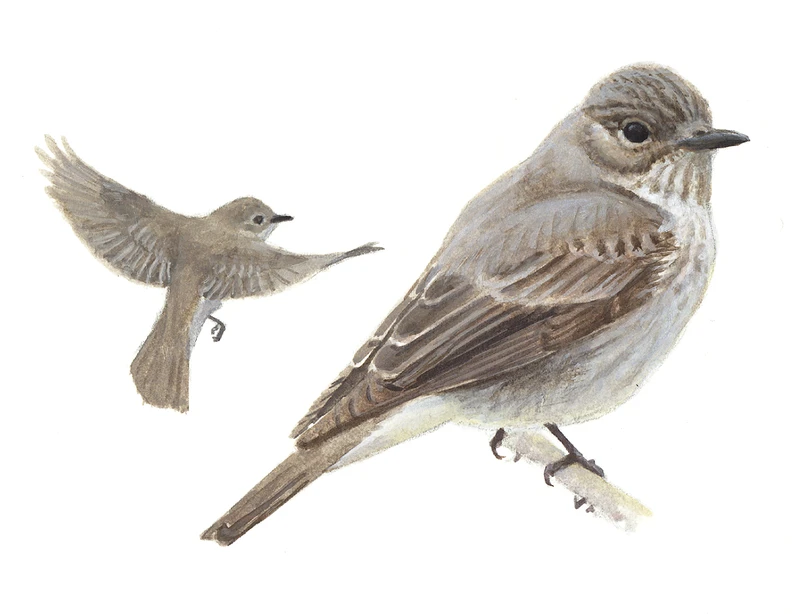
Grauwe Vliegenvanger
Waar houdt ie van
Rust en overzicht. Een hoge uitkijkpost (dode tak, paaltje, draad) met open ruimte ervoor om insecten uit de lucht te plukken. Broedt graag in halfopen bos, boomgaard, park, erven met oude bomen en ook bij boerenschuren. Help ’m: laat een paar dode takken zitten, snoei niet alles strak, zet een zitpaal langs akkerrand of weiland. Plant inheems en insectrijk: wilg, meidoorn, sleedoorn, lijsterbes, vlier. Laat een hoek met ruigte staan.
Ecologisch belang
Insecteneter pur sang: vangt vliegen, muggen, kevers en nachtvlinders. Een kleine luchtjager die meehelpt de insectenbalans gezond te houden. Minder insecten = minder grauwe vliegenvangers. Zo simpel is het.
Wanneer in Nederland
Mei tot en met september. Trekvogel; de winter brengt hij in Afrika door.
Status
Vrij algemene soort, maar al jaren in duidelijke afname. Meer rommelhoekjes en meer insecten maken echt verschil.
Het geluid van...
OH NEEEEE, hoe klinkt de Grauwe Vliegenvanger dan?! We hebben nog geen goede opnames van deze vrolijke fluiter in onze database. weet jij het? Heb je hem wel eens gehoord? of heb je een goeie opname van deze soort, laat het ons weten en mail naar: [email protected]
We blijven deze tekst aanscherpen. Mis je iets of klopt er iets niet? Mail [email protected] en help mee. Dan strijken we samen de veren weer even goed.