


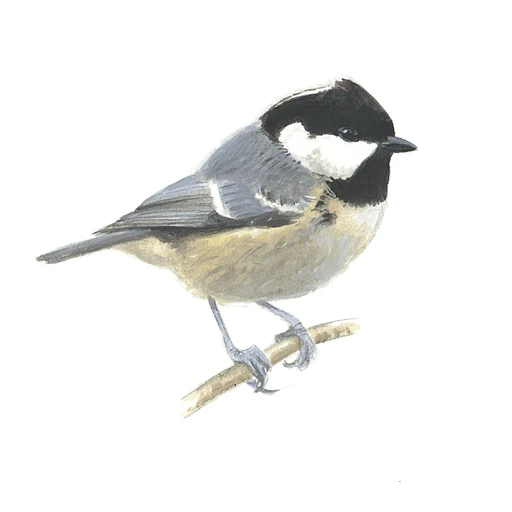
Zwarte Mees
Waar houdt ie van
Naaldbomen met pit. Dennen en sparren waar hij acrobatisch aan kegels hangt. Maar hij pakt net zo graag een rommelige hoek met struiken. Hang een nestkast op in bosrand, park of erf: klein invlieggat, rustig plekje. Laat dode takken en oude stammen liggen; daar peutert hij zijn snacks uit. In landbouwgebied: maak houtwallen en singels weer dicht en gevarieerd. Wind eruit, leven erin.
Ecologisch belang
Insecteneter met een bonus: hij ruimt rupsen, larven en spinnetjes op in bomen. In de winter schakelt hij over op zaden, vooral uit naaldbomen. Zelf staat hij op het menu van sperwer en katten—dus geef dekking: dichte struiken, doornhagen, geen strakgeschoren “netjes”.
Wanneer in Nederland
Het hele jaar. In herfst en winter extra kans door rondzwervende vogels uit het noorden en oosten.
Status
Algemeen. Plaatselijk afhankelijk van naaldbos en geschikte broedplekken.
Zo klinkt een Zwarte Mees
We blijven deze tekst aanscherpen. Mis je iets of klopt er iets niet? Mail [email protected] en help mee. Dan strijken we samen de veren weer even goed.