


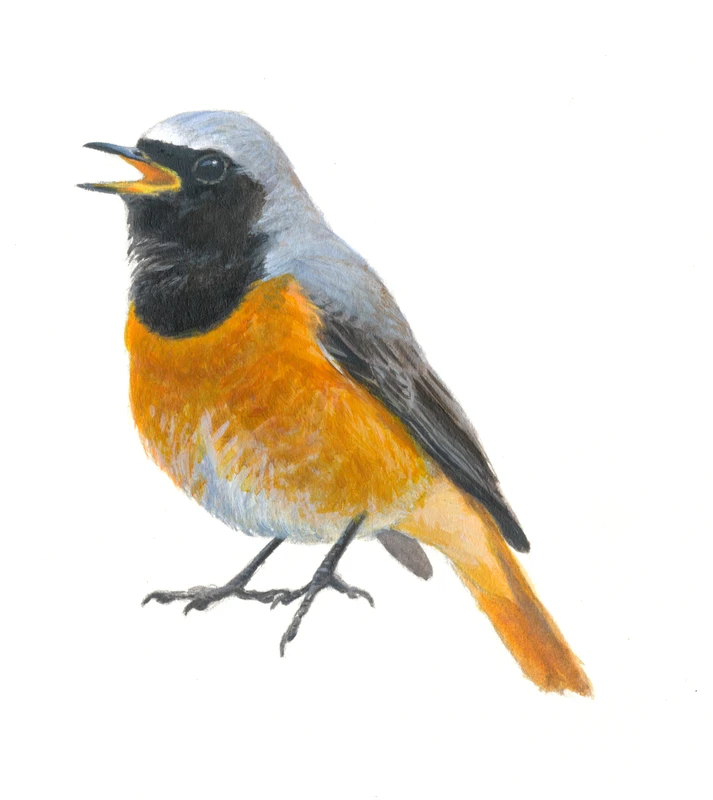
Gekraagde Roodstaart
Waar houdt ie van
Licht en rommel. Oude boomgaarden, erven, parken met grote bomen, open bosranden. En vooral: holtes. Hang nestkasten op (opening ± 3,2 cm), liefst aan een rustige gevel of boom, 2–4 meter hoog. Laat dode takken en een rafelige stam staan: gratis woonruimte. Maak het niet te strak. Een rommelhoek met takkenril, houtstapel en wat ruigte is top.
Ecologisch belang
Insectenjager met smaak. Pakt vliegen, kevers, rupsen en spinnen; in nazomer ook bessen. Voert jongen met een lopend buffet uit je tuin. Zelf staat ie ook op het menu van sperwer en katten, dus geef ‘m dekking: dichte struiken en hagen.
Wanneer in Nederland
Zomergast. Meestal vanaf april, weg vanaf september.
Status
Broedvogel, Ten opzichte van de jaren 70 afgenomen, maar trend laatste jaren weer toename (ook wel eens leuk). Helpen kan simpel: meer insecten, meer holtes, minder opruimen.
Zo klinkt een Gekraagde Roodstaart
We blijven deze tekst aanscherpen. Mis je iets of klopt er iets niet? Mail [email protected] en help mee. Dan strijken we samen de veren weer even goed.