


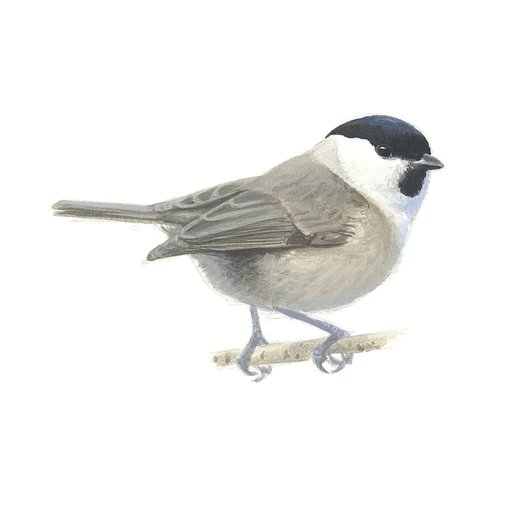
Glanskop
Waar houdt ie van
Rustige, natte stukjes met elzen en wilgen. Denk: broekbos, moerasrand, slootkant, vochtig park. In de tuin? Zet een rommelhoekje aan: struiken, wat dood hout, en vooral inheemse bessenmakers zoals vlier en lijsterbes. Hang een nestkast op een rustige plek; klein invlieggaatje, uit de volle zon.
Ecologisch belang
Deze mees is een voorraadbeheerder. Hij verstopt zaden en insecten, en vergeet er altijd een paar. Mooi cadeau voor de natuur. Hij houdt ook rupsen en kleine insecten kort, precies waar jonge vogels op draaien. Sperwer en boommarters lusten hem ook: hoort bij het menu, dus bij het systeem.
Wanneer in Nederland
Het hele jaar. In de winter vaak in gemengde groepjes met andere mezen, spechten en goudhaantjes.
Status
Broedvogel, maar geen topper in aantallen: lokaal en kwetsbaar door verdroging en het verdwijnen van nat, ruig bos en struweel.
Zo klinkt een Glanskop
We blijven deze tekst aanscherpen. Mis je iets of klopt er iets niet? Mail [email protected] en help mee. Dan strijken we samen de veren weer even goed.