


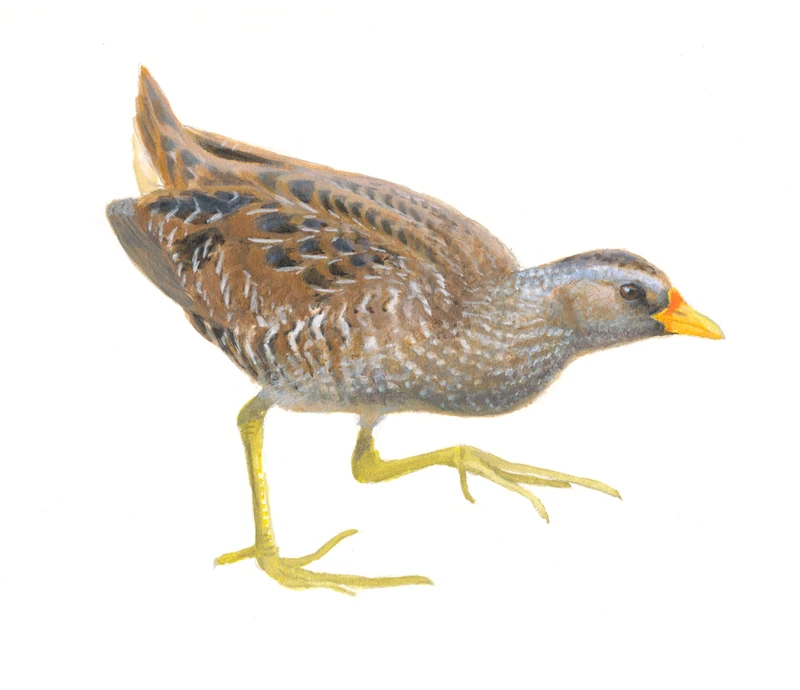
Porseleinhoen
Waar houdt ie van
Natte rommel. Ondiepe plassen, modderranden en ruige oevervegetatie. Slootkanten, moerasjes, natte rietlanden, tijdelijke onder water gelopen weilanden. Rust graag in dichte pollen. Tip: laat een hoek verlanden. Maai gefaseerd, niet alles in één keer. Houd water langer vast met stuwen of een ondiepe poel. Laat riet, lisdodde en zeggen staan. Plant langs oevers wat dotterbloem, watermunt en kattenstaart voor extra insectenleven.
Ecologisch belang
Opruimer van het natte land. Eet vooral insecten, larven, slakjes en kleine wormpjes. Kuikens zijn afhankelijk van een buffet aan waterinsecten. Porseleinhoen is ook prooi voor roofvogels en vos: het hoort in de keten, dus geef het dekking en rust.
Wanneer in Nederland
Mei tot en met september. Vaak hoor je ’m eerder dan je ’m ziet.
Status
Zeldzame broedvogel. Aantallen wisselen sterk per jaar en staan onder druk door verdroging en strak beheer.
Zo klinkt een Porseleinhoen
We blijven deze tekst aanscherpen. Mis je iets of klopt er iets niet? Mail [email protected] en help mee. Dan strijken we samen de veren weer even goed.