


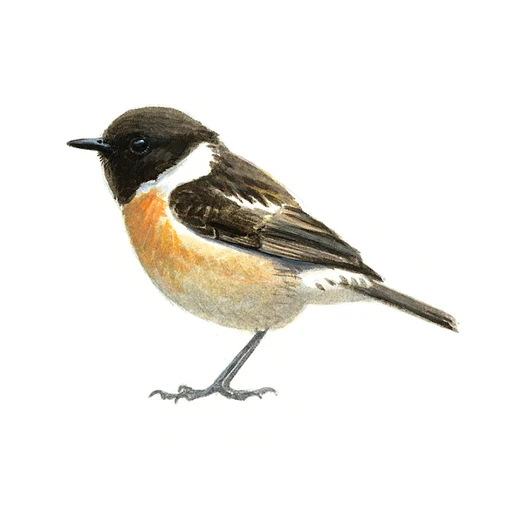
Roodborsttapuit
Waar houdt ie van
Open land met rommelige randjes. Ruige graslanden, heide, dijken, duinen, bloemrijke akkerranden. Overal waar je lage begroeiing hebt om in te schuilen én paaltjes, takken of hekpalen om vanaf te speuren. Doen: laat stukken gras langer staan, maai gefaseerd, en zet hier en daar een paar staken of een takkenril neer. In tuin en park: maak een wilde hoek met schapenzuring, margriet, knoopkruid, rolklaver en distels. Niet strak harken. Wel leven.
Ecologisch belang
Insecteneter met tempo. Pakt kevers, vliegen, rupsen, sprinkhanen en spinnen; in het najaar ook bessen. Hij is zelf prooi voor sperwer en soms een kat. Meer dekking en meer insecten = meer roodborsttapuiten.
Wanneer in Nederland
Vooral van maart tot en met oktober. Een klein deel overwintert, maar de meeste trekken naar Zuidwest-Europa en Afrika.
Status
Broedvogel die het moeilijk heeft door verarming en dichtgroeien van open landschap. In veel gebieden afgenomen, maar de laatste jaren gaat het gelukkig iets beter.
Zo klinkt een Roodborsttapuit
We blijven deze tekst aanscherpen. Mis je iets of klopt er iets niet? Mail [email protected] en help mee. Dan strijken we samen de veren weer even goed.