

.webp?v=76844174e902)
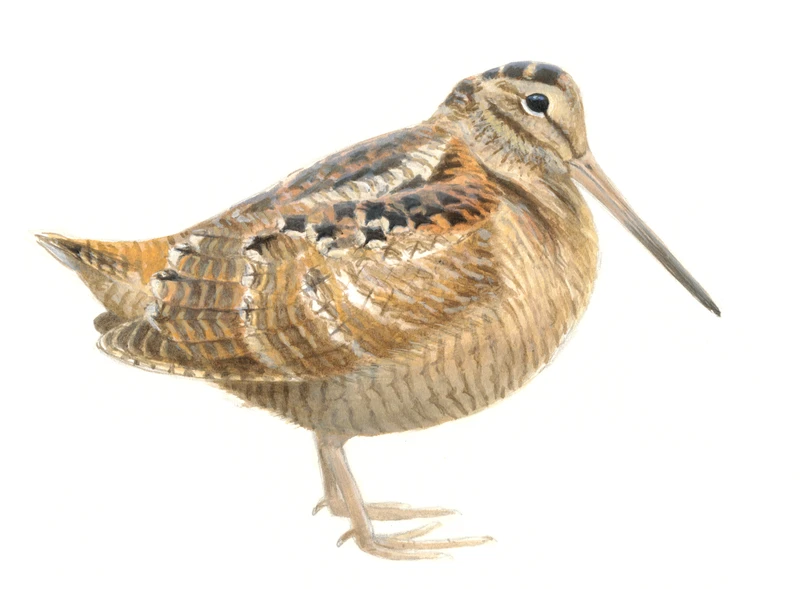
Houtsnip
Waar houdt ie van
Rommelige, vochtige bosranden. Bladstrooisel, zachte grond, slootkanten. Rust vooral. Laat in je tuin of park een hoek “niet-aanharken” liggen. Bladeren laten liggen is voor deze vogel geen slordigheid, maar een buffet. Op erf en in het buitengebied: houd houtwallen, singels en struweelstroken breed en donker. Maak natte plekjes niet meteen droog; een ondiepe poel of drassige greppel is goud.
Ecologisch belang
De houtsnip prikt met z’n lange snavel regenwormen en insectenlarven uit de bodem. Daarmee ruimt hij op én laat hij zien dat je bodem leeft. Wordt zelf gegeten door roofvogels en zoogdieren; hij hoort in de voedselketen van een gezond, gevarieerd landschap.
Wanneer in Nederland
Het hele jaar. Veel zijn wintergast, en er broeden ook houtsnippen bij ons. In het broedseizoen (voorjaar) extra kwetsbaar door verstoring.
Status
Geen bedreigde soort, maar wel gevoelig: minder nat bos, minder rust en verdroging maken het hem lastig.
Het geluid van...
OH NEEEEE, hoe klinkt de Houtsnip dan?! We hebben nog geen goede opnames van deze vrolijke fluiter in onze database. weet jij het? Heb je hem wel eens gehoord? of heb je een goeie opname van deze soort, laat het ons weten en mail naar: [email protected]
We blijven deze tekst aanscherpen. Mis je iets of klopt er iets niet? Mail [email protected] en help mee. Dan strijken we samen de veren weer even goed.